01
Section
Project overview
01
Project overview
  • ABLE: Resume your work

    ABLE: Resume your work

Every time you switch projects, you rebuild your working state: reopen the tabs, find the notes, locate the files, remember where you left off. This independent concept explores how to make that state easier to resume. 

Every time you switch projects, you rebuild your working state: reopen the tabs, find the notes, locate the files, remember where you left off. This independent concept explores how to make that state easier to resume. 

02
Section
Process, approach, and outcomes
02
Process, approach, and outcomes

This showcase combines shipped product work with an independent, unshipped design direction.

Timeline

2021–2026

Role

Product designer and manager

Team

Founder and product owner: Boris V.
Engineering: Boris B., Roman H., Andriy K.
Market researcher: Andrii S.
Project manager: Andrii Y.
Quality Assurance: Sabina O., Denis H.

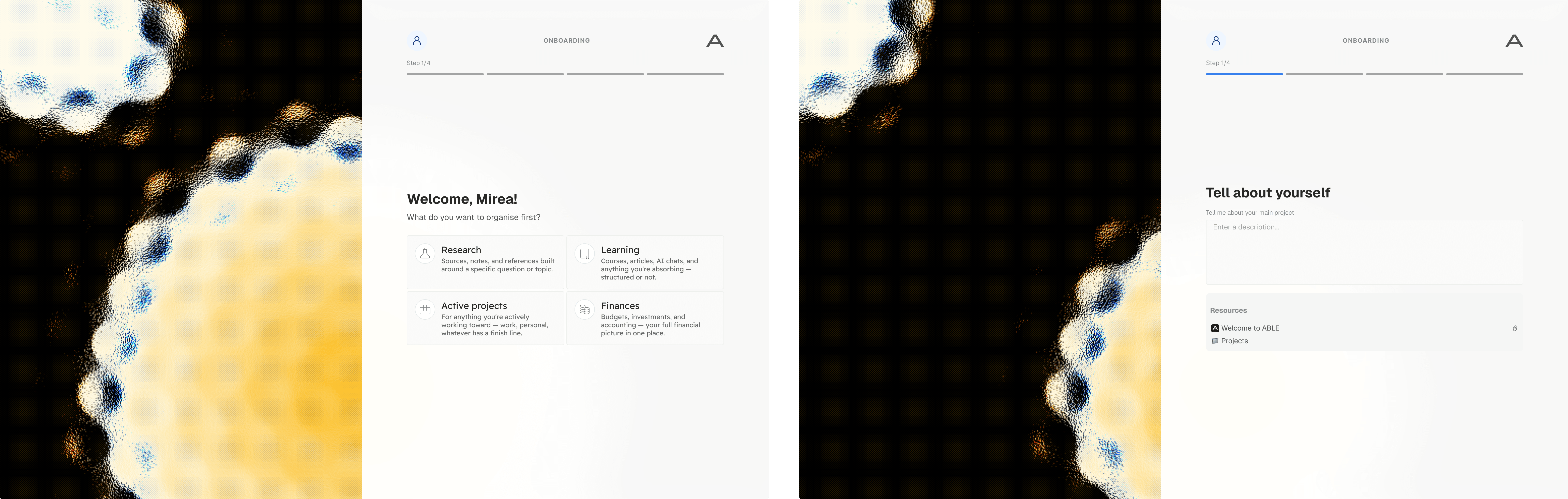
This is what you see when you first launch ABLE

Process, approach, and outcomes

I did this and that like that

01

Research‑led product direction

At ABLE, I translated continuous discovery into roadmap priorities, information architecture, interaction patterns, and prototypes.

02

Validated problem, unresolved activation

Research validated the problem and almost 4,000 people joined the waitlist, but most new users did not return. The full Medium case study examines the evidence, scope decisions, and three hypotheses behind that activation gap.

03

A system built around resumption

The independent concept focuses the product around one moment: returning to a project without reconstructing its working state. I redesigned onboarding, navigation, and the visual system around reaching that moment sooner.

This is what you see when you first launch ABLE

Process, approach, and outcomes

I did this and that like that

Research‑led product direction

At ABLE, I translated continuous discovery into roadmap priorities, information architecture, interaction patterns, and prototypes.

Validated problem, unresolved activation

Research validated the problem and almost 4,000 people joined the waitlist, but most new users did not return. The full Medium case study examines the evidence, scope decisions, and three hypotheses behind that activation gap.

A system built around resumption

The independent concept focuses the product around one moment: returning to a project without reconstructing its working state. I redesigned onboarding, navigation, and the visual system around reaching that moment sooner.

03
Focus
Onboarding
03
Process, approach, and outcomes

This is a five-year 0→1 project building a desktop information management tool.
As the sole designer across all phases, I owned the full product design: research, architecture, interaction, UI.
Later, I co-owned the product vision with the founder: product strategy, feature prioritisation, backlog ownership, roadmap.

Onboarding

Support research from medium {{go to medium and find lines where we can send user to read}} — WHY ONBOARDING??? — go to medium, find why paste here and send reader to read more there.

Goal‑led onboarding creates the first Context before Home opens.

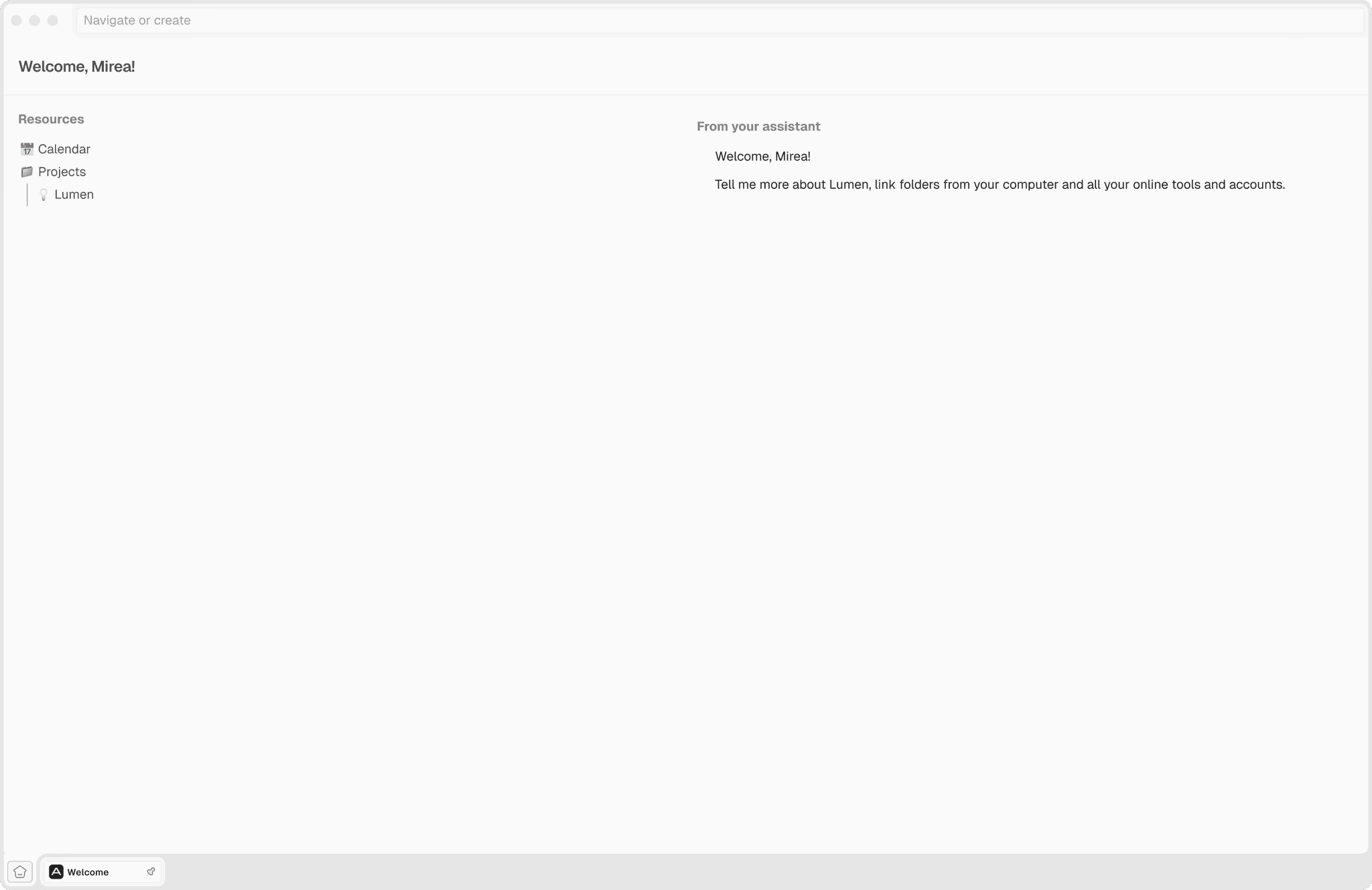
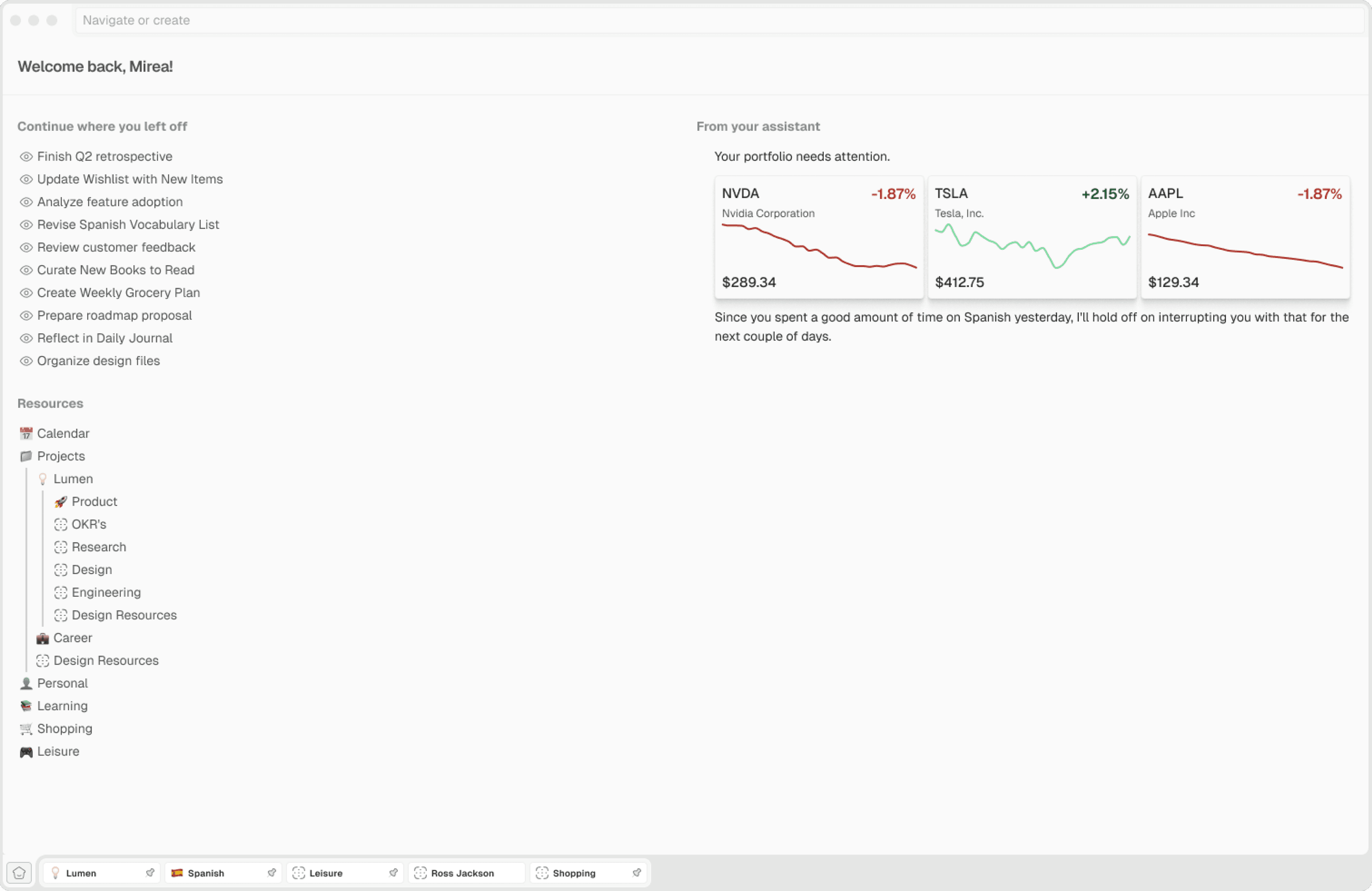
The Home screen is where everything starts.

Over time, Home becomes the starting point for managing resources, speaking to a proactive assistant, and resuming work through the Views.

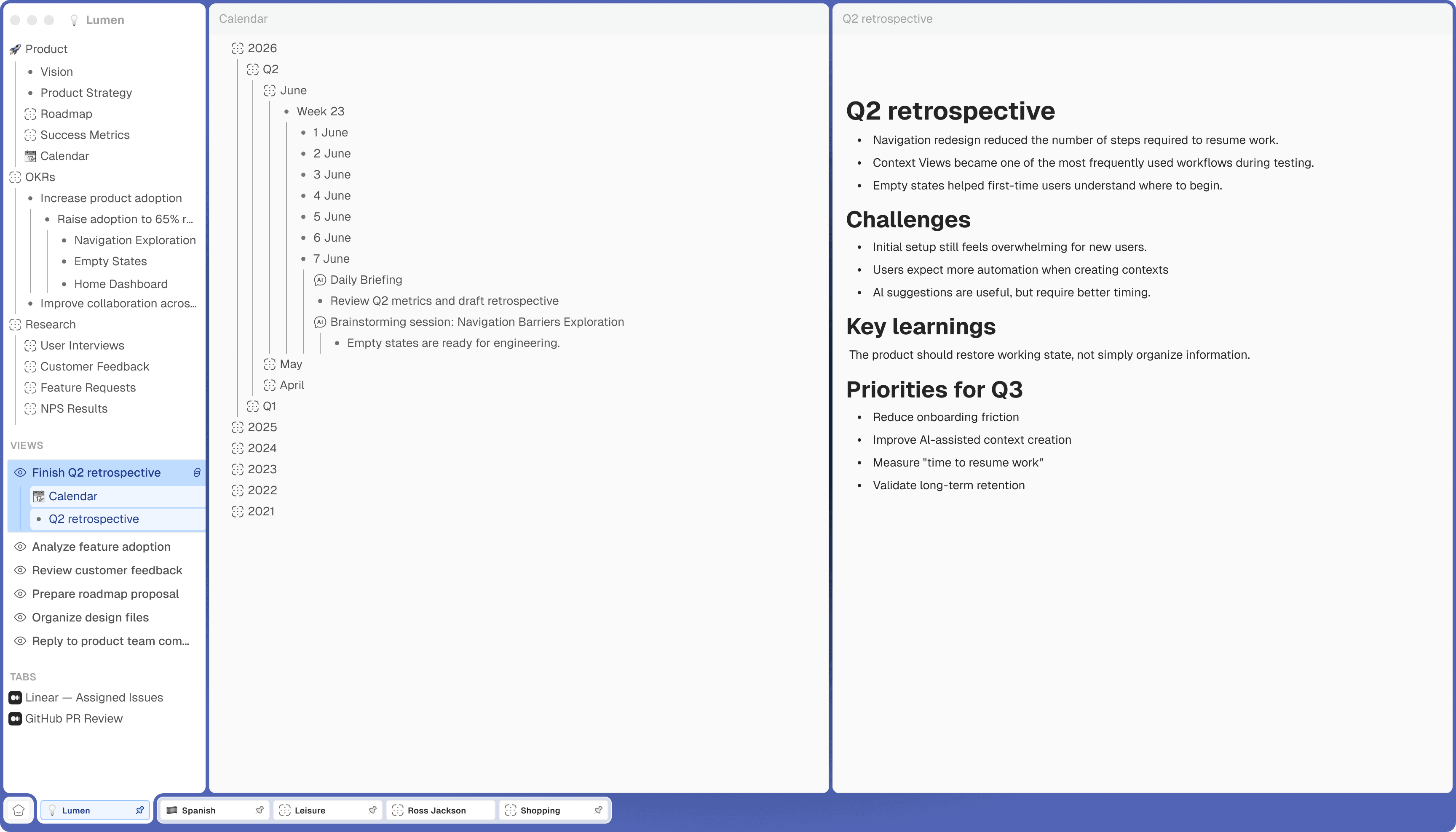
Views preserve the resources and panes needed to resume a specific task.

After you switch, you can start work directly where you left.

This is what you see when you first launch ABLE

Process, approach, and outcomes

I did this and that like that

Research‑led product direction

At ABLE, I translated continuous discovery into roadmap priorities, information architecture, interaction patterns, and prototypes.

Validated problem, unresolved activation

Research validated the problem and almost 4,000 people joined the waitlist, but most new users did not return. The full Medium case study examines the evidence, scope decisions, and three hypotheses behind that activation gap.

A system built around resumption

The independent concept focuses the product around one moment: returning to a project without reconstructing its working state. I redesigned onboarding, navigation, and the visual system around reaching that moment sooner.

04
Section
Design system
04
Section

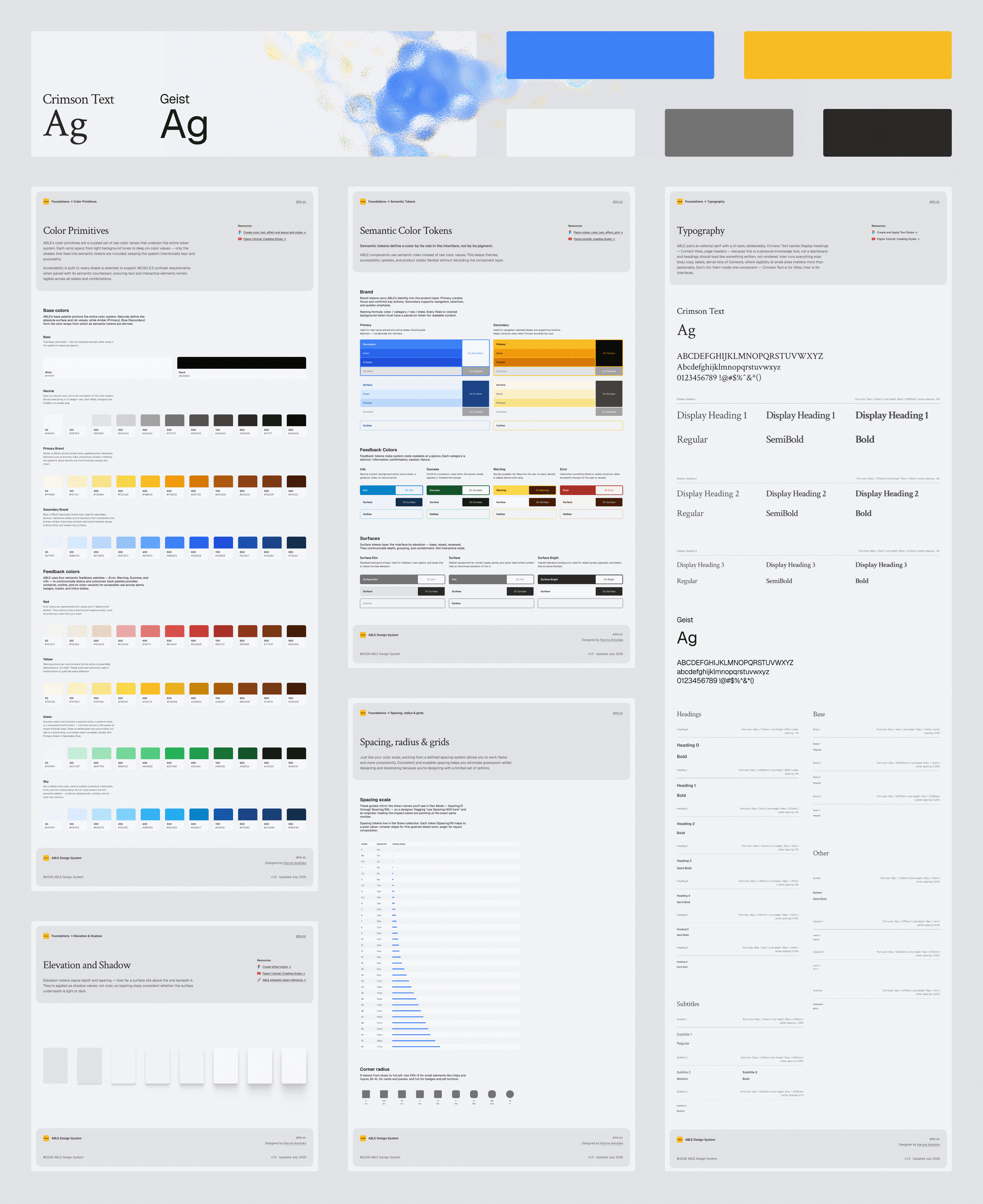
The system turns ABLE’s visual identity into reusable rules, keeping every screen and state visually consistent.

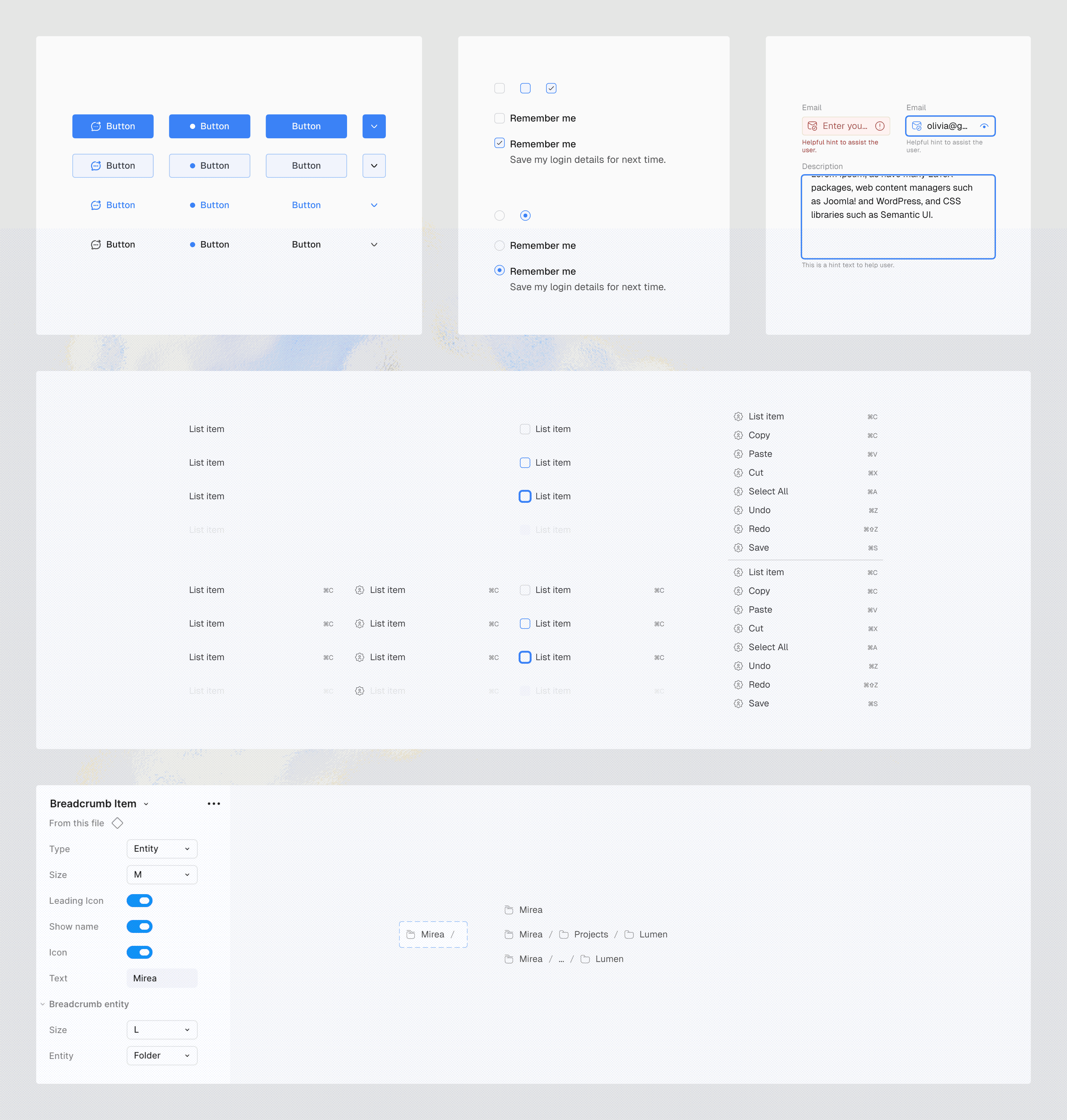
Base components provide the shared controls and states for ABLE’s product‑specific patterns: the Context picker, sidebar, editor, and browser controls.

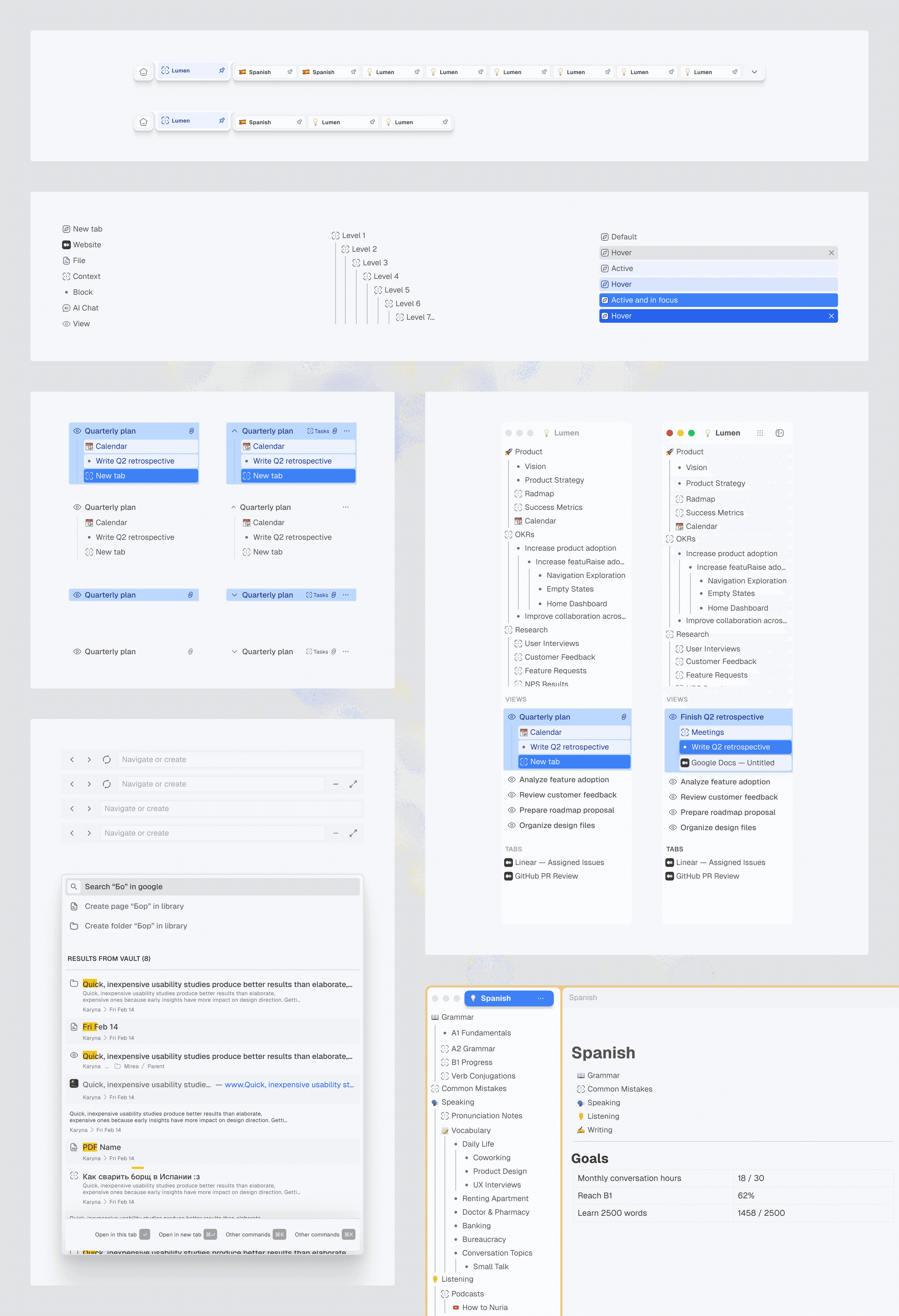
ABLE’s navigation system connects Contexts, resources, Views, tabs, search, and browser controls through a shared hierarchy and consistent interaction states.

Design system

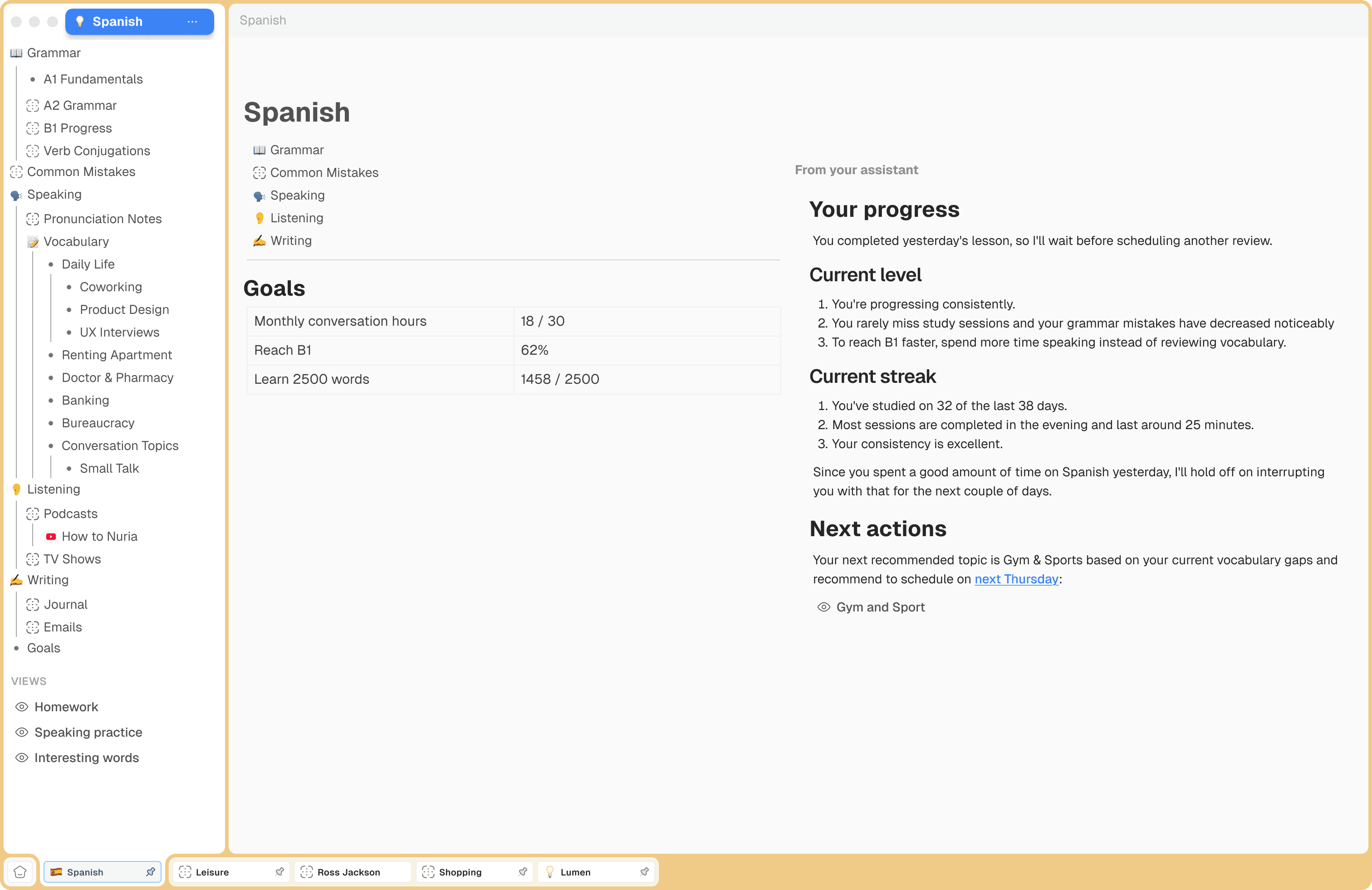
After defining the core experience, I rebuilt the visual system from the foundations up: color, typography, spacing, elevation, and shared states. Context colors carry through navigation, Views, and the Context picker, while the workspace stays neutral.
Light and dark interfaces preserve the same hierarchy, Context colors, and interaction states.

Light and dark interfaces preserve the same hierarchy, Context colors, and interaction states.

Final section
Focus
Reflection & links
Final section
Focus

At AegisAlpha, I worked on ABLE as a product manager and designer, contributing to research, product decisions, information architecture, and shipped iterations.

After leaving, I independently developed the visual identity, UI, design system, navigation, Context picker, and Views shown in this showcase. These concepts were grounded in the team’s research but were not built or shipped by AegisAlpha.